
EU-Taxonomie-Bewertung - Klimaschutz - Wesentlicher Beitrag
Diese Seite führt Sie durch die Schritte, um ein Gebäude für das Teilziel des Klimaschutzs (Erheblicher Beitrag) zu bewerten.
Schritt 1: Greifen Sie auf das EU-Taxonomie-Bewertungsformular zu
Wählen Sie ESG-Berichte aus dem linken Seitenmenü aus.
Unter EU-Taxonomie klicken Sie auf Werkzeug, um die Tabelle mit allen bestehenden Taxonomieeinträgen für das Gebäude zu erhalten.
Klicken Sie auf die Schaltfläche Hinzufügen, um ein neues EU-Taxonomie-Formular zu erstellen.
Sie müssen alle Felder im Formular ausfüllen, um fortzufahren.

Schritt 2: Starten Sie die Beurteilung
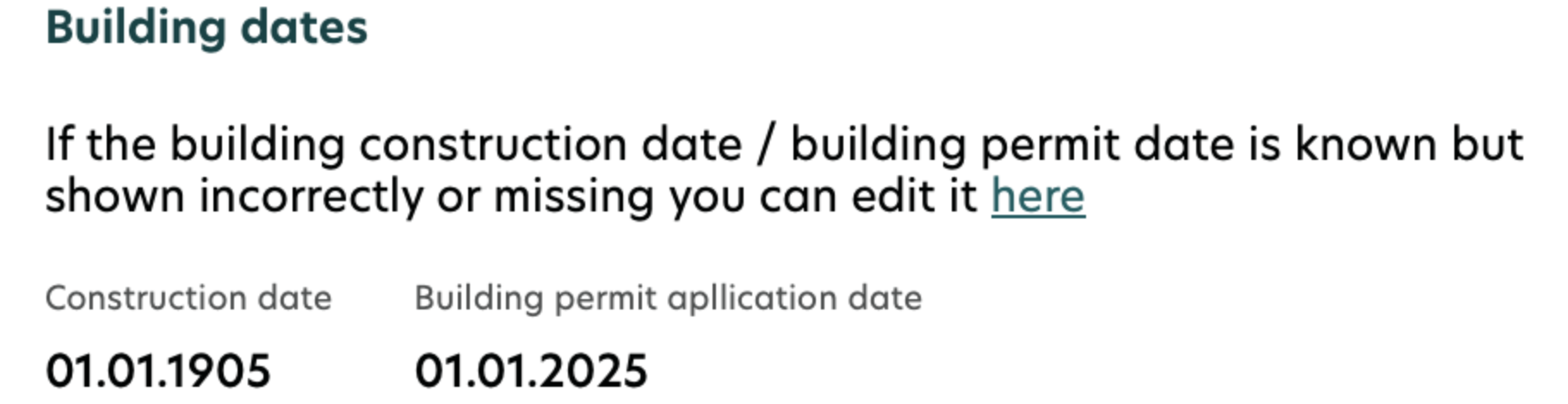
Wenn Sie ein neues Gebäude bewerten, sehen Sie auch Einzelheiten zum Baujahr, wie das Baujahr und das Datum der Beantragung der Baugenehmigung.
Wenn diese Daten fehlen, können Sie sie direkt im Formular aktualisieren.
Um sich als neues Gebäude zu qualifizieren, muss das Datum der Beantragung der Baugenehmigung nach dem 31.12.2020 liegen.
Wenn das Genehmigungsdatum fehlt, aber das Baujahr nach dem 31.12.2020 liegt, folgt das Gebäude dennoch dem vorherigen Beurteilungsablauf.
EPC-Überprüfung:
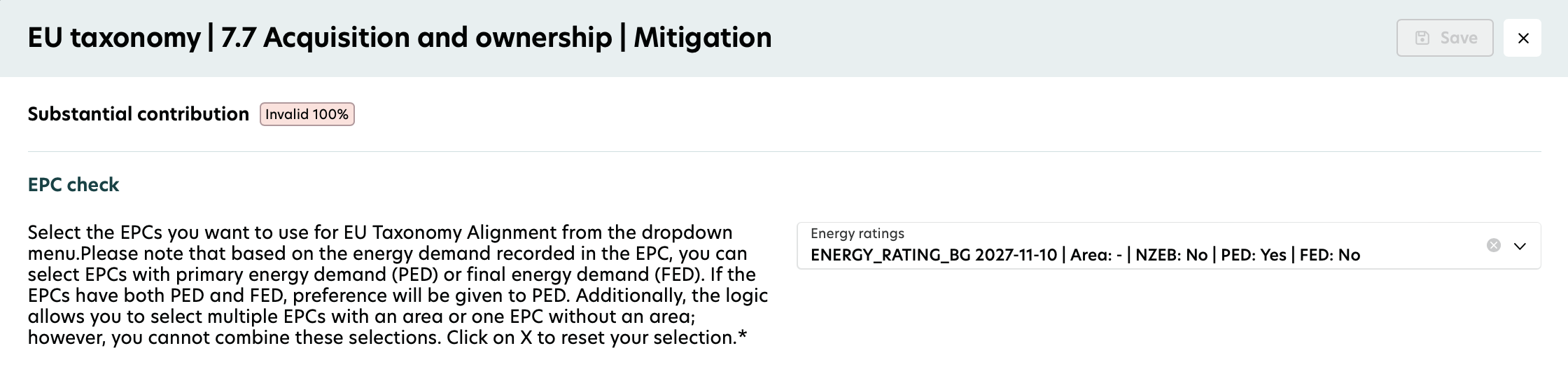
In diesem Schritt wählen Sie das Energieausweis-Zertifikat (EPC) aus, das für die EU-Taxonomie-Beurteilung für das gewählte Jahr zu melden ist. Bei der Verwaltung von EPCs für Gebäude variiert der Auswahlprozess je nach Anzahl der mit jedem Gebäude verbundenen EPCs:
Einzelnes EPC: Wenn Ihr Gebäude nur einen EPC hat, wird dieser automatisch ausgewählt.
Mehrere EPCs: Wenn es mehrere EPCs gibt, sehen Sie diese in einem Dropdown-Menü. Wählen Sie denjenigen aus, der Ihren Berichtsanforderungen entspricht.
Kein EPC, aber PED: Wenn Ihr Gebäude keinen EPC hat, aber der Wert des Primärenergiebedarfs (PED) verfügbar ist, wird dieser Wert mit dem Benchmark verglichen.
Kein EPC: Wenn Ihr Gebäude keinen EPC hat und der Wert des Primärenergiebedarfs (PED) nicht verfügbar ist, wird der Status als Nicht Ausgerichtet markiert.
Bei der Auswahl von Energieausweisen (EPCs) für die EU-Taxonomiekonformität:
Verwenden Sie das Dropdown-Menü, um ein EPC entsprechend seinem Energiebedarf auszuwählen.
EPCs können Primärenergiebedarf (PED) oder Endenergiebedarf (FED) anzeigen. Wenn beide Werte verfügbar sind, hat PED Vorrang.
Sie können mehrere EPCs auswählen, wenn jeder einen angegebenen Bereich hat. Wenn Sie einen ohne Bereich auswählen, können Sie keine zusätzlichen EPCs hinzufügen.
Schritt 3: Benchmarken Sie Ihr Gebäude
Der Primärenergiebedarf (PED) oder der Endenergiebedarf (FED) Ihres EPCs wird mit den besten 15 % der nationalen und regionalen Gebäudebestände verglichen:
Weniger als Benchmark: Die EPC-Fläche kann potenziell den Anforderungen der EU-Taxonomie entsprechen.
Mehr als Benchmark: Die EPC-Fläche entspricht nicht den Anforderungen der EU-Taxonomie.
Wichtige Hinweise:
EPCs mit der Energieklasse A werden nicht mit dem besten 15 %-Benchmark verglichen.
Nur für Irland werden EPCs mit der Energieklasse A und B nicht mit dem besten 15 %-Benchmark verglichen.
Nur für Österreich können Sie den Benchmark umgehen, indem Sie die Frage zur OIB-Verordnung beantworten. Wenn das Gebäude den Anforderungen entspricht, ist es potenziell ausgerichtet.

Schritt 4: Gebäudetyp
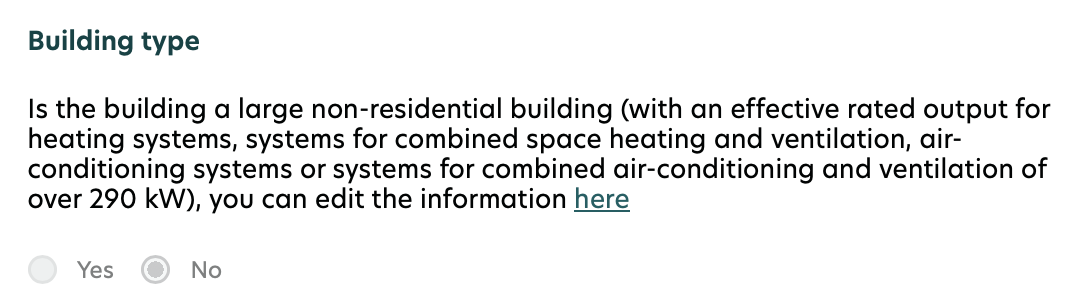
Dieser Schritt überprüft Ihren Gebäudetyp und die HVAC-Kapazität. Das Feld ist basierend auf den HVAC-Details und dem Eigentumstyp vorausgefüllt, die Sie in den ESG-Gebäudedaten eingegeben haben. Nur nichtwohnliche Gebäude mit einer HVAC-Kapazität von über 290 kW müssen einen effizienten Betrieb nachweisen. Um die HVAC-Details zu aktualisieren, klicken Sie auf den Hyperlink, um zum Abschnitt ESG-Gebäudedaten zu gelangen.
Schritt 5: Effizienter Betrieb
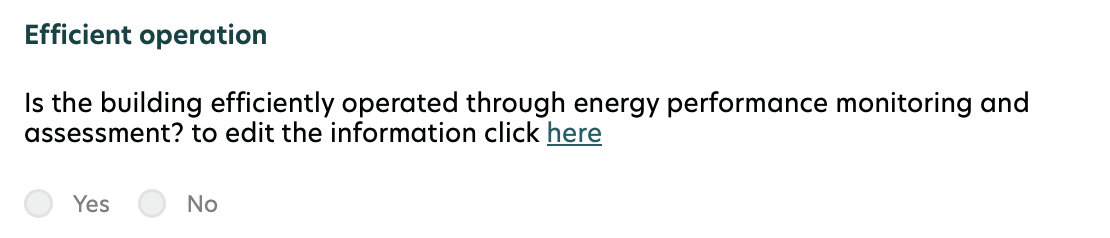
Wenn Ihr Gebäude eine große nichtwohnliche Immobilie ist, müssen Sie einen effizienten Betrieb durch die Überwachung der Energieeffizienz (z. B. ein BMS-System) bestätigen.
Dokumentieren Sie diese Informationen unter Gebäude-ESG-Daten.
Ja: BMS-System verfügbar.
Nein: BMS-System nicht verfügbar.
Wohngebäude benötigen diese Informationen nicht.
Zusätzliche Anforderungen für Neubauten über 5000 m²: Unabhängig vom Immobilientyp müssen Sie zusätzliche Fragen zu Luftdichtheit, thermischer Integrität, Qualitätskontrolle und dem globalen Erwärmungspotenzial (GWP) im Abschnitt ESG-Gebäudedaten beantworten. Beide Bedingungen müssen erfüllt sein, damit die Antwort als „Ja“ markiert wird.

Schritt 6: Legen Sie die Nachweise vor
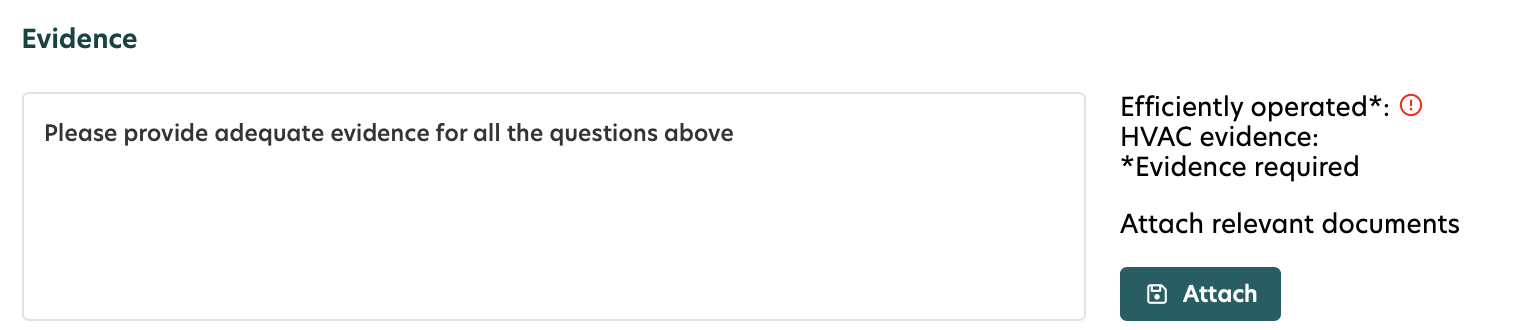
Verwenden Sie das Nachweisfeld, um relevante Informationen hinzuzufügen.
Fügen Sie bei Bedarf unterstützende Dokumente bei. Bei EPC-basierten Abläufen ist das Hochladen von Nachweisen optional.
BuildingMinds empfiehlt keine spezifischen Nachweise - Sie entscheiden, was Sie bereitstellen möchten.
Das System berechnet Ihre EU-Taxonomie-Beurteilung basierend auf Ihren Antworten auf einzelne Fragen, ohne dass diese in Reihenfolge beantwortet werden müssen. Wenn Ihr Gebäude beispielsweise eine große nichtwohnliche Immobilie mit einer HVAC-Kapazität von über 290 kW ist und Sie die Frage nach dem effizienten Betrieb nur mit „Nein“ beantworten, ist das Ergebnis 100 % nicht ausgerichtet - selbst wenn andere Fragen unbeantwortet bleiben.